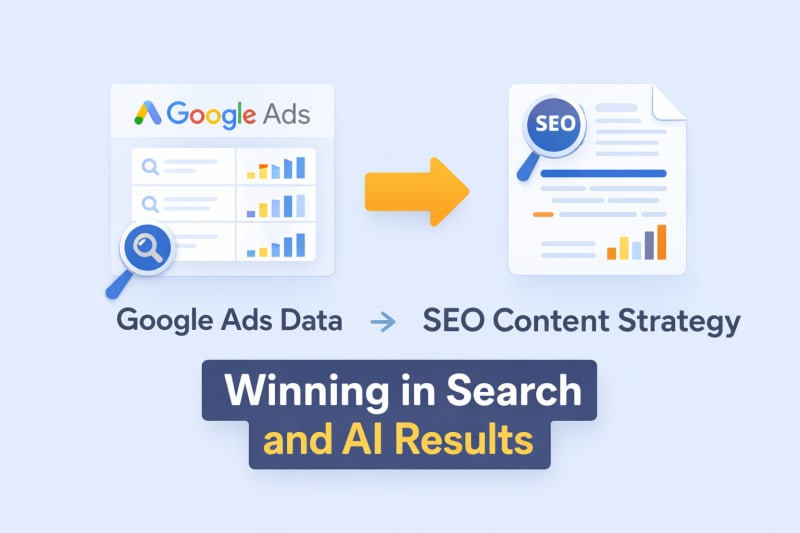


That shift has become more serious as Google’s AI search features have expanded. Semrush found AI Overviews triggered for 6.49% of queries in January 2025, rose to nearly 25% in July, and settled around 15.69% in November 2025. Google also says AI Overviews and AI Mode are now part of Search, and that these experiences can surface a wider and more diverse set of links than classic search through techniques like query fan-out.
The wrong reaction is panic. The right reaction is to adjust your SEO strategy so your content still earns visibility, clicks, and conversions even when Google answers more of the question on its own.
Why Zero-Click Search Hurts Organic Traffic
The biggest threat is not only lower traffic. It is lower click-through opportunity on the queries that used to bring steady top-of-funnel visits. When Google places AI-generated summaries, People Also Ask, videos, forums, and other SERP features above traditional listings, your page may still get impressions while attracting fewer clicks. That means ranking alone is no longer enough. You need to be worth the click.
At the same time, Google’s own guidance makes clear that there is no separate “AI SEO” playbook. The same core fundamentals still apply. Google says there are no additional technical requirements and no special schema required to appear in AI Overviews or AI Mode. Pages simply need to be indexed, eligible to appear in Search with a snippet, and built on helpful, reliable, people-first content.
1. Create Content AI Summaries Cannot Fully Replace
If your page only restates facts that can be found anywhere, it is easier for Google to summarize without sending the user to you. Google’s own advice for succeeding in AI search is to focus on unique, non-commodity content that is genuinely helpful and satisfying. That means original research, firsthand experience, expert commentary, proprietary data, real examples, strong opinions backed by evidence, and practical detail that goes beyond a generic answer.
This matters even more because Google says users in AI search experiences are asking longer, more specific questions and then following up with deeper ones. If your content is built around shallow, one-paragraph answers, you are competing with the exact kind of information AI can compress. If your content solves layered problems, shows process, and answers follow-up questions naturally, you are far harder to replace.
2. Optimize for Click Worthiness, Not Just Rankings
In a zero-click environment, your title and snippet have to do more work. Google says title links are often the primary piece of information people use to decide which result to click, and it recommends writing titles that are descriptive, concise, and accurately reflect the page. It also says good meta descriptions can improve the quality and quantity of search traffic by giving users a clear summary of what the page offers.
That means your organic result should promise something the SERP itself does not fully provide. A stronger angle, a clearer benefit, a fresher insight, or a more specific outcome can still win the click even when an AI Overview is present. In 2026, the question is no longer “Do I rank?” It is “Does my listing give the user a reason to leave the results page?”
3. Use Structured Data to Win More SERP Real Estate
Structured data will not magically protect traffic, but it can make your result more engaging. Google says adding structured data can make pages eligible for richer results, which may encourage users to interact more with your website. In Google’s cited case studies, several publishers saw higher click-through rates or stronger engagement after implementing structured data correctly.
This is especially important now because richer search appearances can help your result stand out when classic blue links are pushed lower. Product, article, review, organization, and other supported schema types can improve how your content is presented, as long as the markup matches the visible page content and follows Google’s guidelines.
4. Track Branded and Non-Branded SEO Separately
One of the easiest ways to misunderstand a traffic drop is to treat all organic traffic as one bucket. Google introduced a branded queries filter in Search Console specifically to help site owners separate branded from non-branded demand. Google notes that branded queries usually earn higher rankings and higher click-through rates, while non-branded queries are more useful for understanding organic growth from new users.
That distinction matters in 2026 because zero-click pressure often hits non-branded informational traffic first. If branded traffic is stable but non-branded CTR is sliding, you may not have a sitewide SEO problem. You may have a SERP competition problem. That is a different issue and it requires a different response.
5. Keep Your Site Eligible for Both Classic Search and AI Features
Google’s guidance is clear here. To appear as a supporting link in AI Overviews or AI Mode, a page must be indexed and eligible to show in Google Search with a snippet. Google also recommends allowing crawling, making content easily discoverable through internal links, keeping important content in text form, supporting pages with quality images and videos where relevant, and ensuring structured data matches what users actually see on the page.
So before chasing new tactics, clean up the basics. Fix crawl blocks. Strengthen internal linking. Improve page experience. Make sure your key content is not hidden in scripts or thin templates. In many cases, protecting traffic in 2026 is less about hacks and more about removing friction that keeps good pages from being fully understood and surfaced.
6. Be Careful With Snippet Controls, but Know They Exist
Google allows site owners to control how much of a page can be shown in search through nosnippet, max-snippet, and data-nosnippet, and says those controls also affect how content can appear in AI features on Search. That gives publishers a real option when they believe too much of the answer is being exposed without enough click incentive.
But this should be used carefully. If you restrict too much, you may reduce your visibility instead of improving it. These controls make sense only when you understand the tradeoff and test page types strategically. For most sites, the first priority should still be improving uniqueness and click appeal before limiting previews.
7. Measure Qualified Traffic, Not Just Sessions
Google says traffic from AI features is included in the overall Web search performance data in Search Console, and it also notes that clicks from results pages with AI Overviews have tended to be higher quality, with users more likely to spend more time on site.
That is why traffic protection in 2026 should not be measured only by raw sessions. Look at conversions, engagement, assisted conversions, branded lift, and non-branded visibility trends. If total clicks dip but lead quality rises, your search strategy may be healthier than the headline number suggests.
Final Thoughts
Zero-click search is growing, and organic traffic is under real pressure. But this is not the end of SEO. It is the end of lazy SEO. Thin content, generic answers, weak titles, poor SERP presentation, and vague performance tracking are getting punished faster than ever. The brands that protect organic traffic in 2026 will be the ones that publish original value, make every listing more clickable, monitor branded and non-branded performance separately, and build pages strong enough to compete in both classic search and AI-driven results.